icon New mining location added: Finland More information

How Does Bitcoin Work? A Non-Technical Explanation

Bitcoin is a digital currency that lets you send money to anyone in the world without a bank, government, or middleman. It runs on a global network of computers, operates 24/7, and has never been shut down in over 17 years of continuous operation.

What Is Bitcoin in Simple Terms?

Bitcoin is digital money. Like the dollars in your bank account, Bitcoin exists as numbers on a screen. But unlike dollars, Bitcoin is not controlled by any government, central bank, or corporation. No single entity can print more of it, freeze your account, or reverse your transaction. It is money that belongs to whoever holds it, period.

Bitcoin was created in 2009 by an anonymous person (or group) using the name Satoshi Nakamoto. The original goal was to create a peer-to-peer electronic cash system that did not require trust in any institution. Seventeen years later, Bitcoin has grown into a $2+ trillion asset held by individuals, corporations, and even governments.

How Does Bitcoin Work Without a Bank?

In the traditional financial system, banks are trusted middlemen. When you send money to someone, your bank deducts from your balance and adds to theirs. The bank keeps the ledger (the record of who owns what), and everyone trusts the bank to maintain it honestly.

Bitcoin replaces the bank with a network of thousands of computers around the world. Instead of one company keeping the ledger, every computer on the Bitcoin network keeps a copy of the same ledger. This shared ledger is called the blockchain.

When you send Bitcoin to someone, your transaction is broadcast to the entire network. Miners verify that you actually own the Bitcoin you are trying to send, bundle your transaction with others into a block, and add that block to the blockchain. Once added, the transaction is permanent and visible to everyone.

The key insight: Bitcoin works because thousands of independent computers all verify every transaction independently. No single computer can cheat because every other computer would reject the fraudulent data. Trust is replaced by mathematics and verification.

What Is the Blockchain?

The blockchain is Bitcoin’s transaction ledger. It is a chain of blocks, where each block contains a batch of verified transactions. Every block is cryptographically linked to the block before it, forming an unbroken chain all the way back to the very first block (the “genesis block”) mined on January 3, 2009.

This structure makes the blockchain tamper-proof. If someone tried to change a transaction in block 100,000, it would break the cryptographic link to block 100,001, which would break the link to block 100,002, and so on. Altering one block would require redoing the work for every block after it, which at today’s network size would cost billions of dollars and more energy than most countries consume. Read more about this in our article on how mining secures the network.

Feature Traditional Banking Ledger Bitcoin Blockchain
Who maintains it One bank (centralized) Thousands of computers (decentralized)
Who can see it Only the bank Anyone in the world
Can transactions be reversed Yes (chargebacks, freezes) No (permanent after confirmation)
Uptime Business hours, outages common 24/7/365 since 2009
Permission needed Yes (account approval, KYC) No (open to anyone)
Can be censored Yes (governments can freeze accounts) No (no authority can block transactions)

How Do Bitcoin Transactions Work?

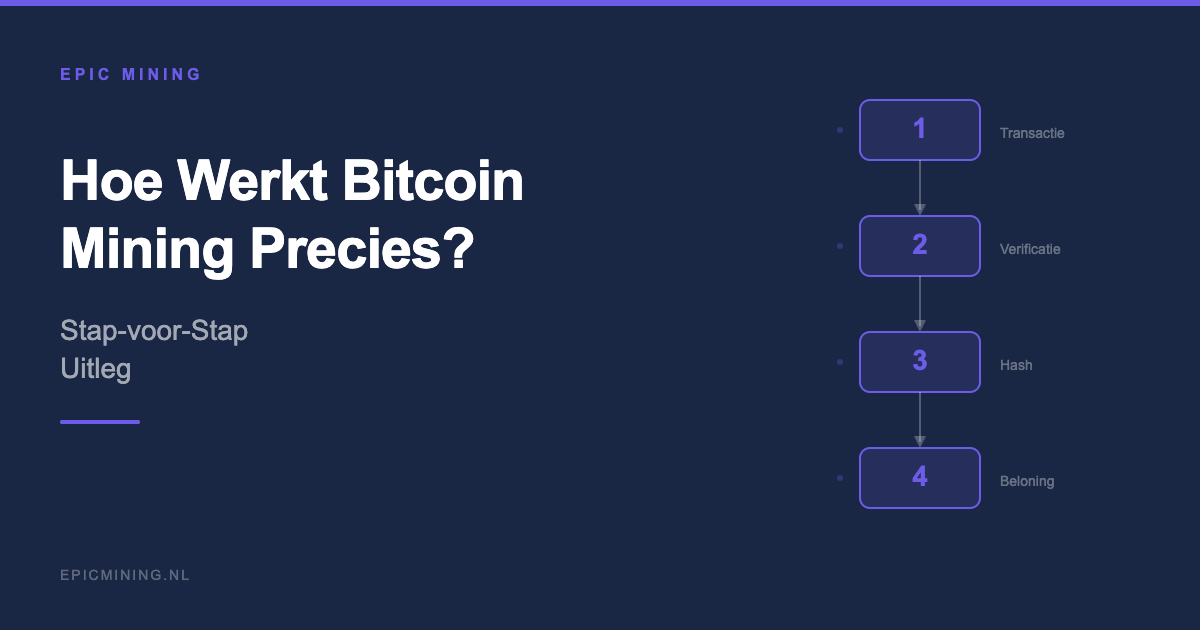
A Bitcoin transaction is a signed message that says “I am sending X amount of Bitcoin from my address to this other address.” Here is the step-by-step process.

Step What Happens Time
1. You initiate You enter the recipient’s Bitcoin address and amount in your wallet Seconds
2. Transaction broadcasts Your wallet signs the transaction with your private key and sends it to the network Seconds
3. Miners verify Miners check that you own the Bitcoin and the math is valid Minutes
4. Block inclusion A miner includes your transaction in a new block ~10 minutes
5. Confirmation The block is added to the blockchain, and your transaction is confirmed ~10 minutes
6. Settlement After 6 confirmations (~60 minutes), the transaction is considered irreversible ~60 minutes

The entire process is automatic. There are no forms to fill out, no approval processes, no business hours. Bitcoin transactions work the same way whether you are sending $10 or $10 million, whether the recipient is next door or on the other side of the world.

~10 min
Average time for a Bitcoin transaction to receive its first confirmation

What Are Bitcoin Wallets and Private Keys?

A Bitcoin wallet is software (or hardware) that stores your private keys and lets you send and receive Bitcoin. Your private key is a long string of characters that proves you own your Bitcoin. Whoever holds the private key controls the Bitcoin associated with it.

Your wallet also has a public address, which is like an email address that others can send Bitcoin to. You can share your public address freely, but your private key must never be shared with anyone. If someone gets your private key, they can take your Bitcoin, and there is no bank to call for a reversal.

This is what people mean when they say “not your keys, not your coins.” If you leave your Bitcoin on an exchange, the exchange holds the private keys, and you are trusting them not to lose or steal your funds. Self-custody (holding your own keys) gives you full control. Learn more in our guide to Bitcoin wallets: hot vs cold storage.

Why Can There Only Be 21 Million Bitcoin?

Bitcoin has a hard cap of 21 million coins. This limit is written into Bitcoin’s code and enforced by every computer on the network. No government, corporation, or developer can change it. As of 2026, approximately 19.8 million Bitcoin have been mined, leaving roughly 1.2 million still to be created through mining.

New Bitcoin enters circulation through mining rewards. Every time a miner adds a block to the blockchain, they receive a reward of newly created Bitcoin. This reward started at 50 BTC per block in 2009 and is cut in half approximately every four years in an event called the halving. The current reward is 3.125 BTC per block. Learn more about what happens when the supply runs out in our article on what happens when all Bitcoin are mined.

Why the cap matters: Traditional currencies can be printed in unlimited quantities. The U.S. dollar has lost over 96% of its purchasing power since the Federal Reserve was created in 1913. Bitcoin’s fixed supply means no one can inflate it away. This is a core reason why people call Bitcoin “digital gold” and why it is increasingly used as a store of value.

What Gives Bitcoin Its Value?

Bitcoin has value for the same reasons gold has value: scarcity, durability, divisibility, portability, and broad acceptance. But Bitcoin adds properties that gold cannot match: it can be sent anywhere instantly, stored without physical space, divided into 100 million units (called satoshis), and verified without trusting anyone.

Bitcoin is also valued because of its network. The more people who use, hold, and accept Bitcoin, the more useful it becomes. With over $2 trillion in market capitalization, institutional adoption by major corporations, and growing recognition as a legitimate asset class, Bitcoin’s network effect continues to strengthen. For a deeper dive, read our article on what gives Bitcoin its value.

How Is Bitcoin Different from Traditional Money?

Property Bitcoin U.S. Dollar Gold
Supply limit 21 million (fixed forever) Unlimited (printed at will) ~205,000 tonnes mined (grows ~1.5%/year)
Portability Send anywhere in minutes Wire transfers take days Heavy, expensive to move
Divisibility 100 million satoshis per BTC 100 cents per dollar Difficult to divide precisely
Censorship resistance No one can freeze your Bitcoin Banks and governments can freeze dollars Physical gold is hard to confiscate
Verification Instant mathematical verification Trust the issuing government Requires assaying
Inflation protection Deflationary by design ~3-8% annual inflation Historically good hedge

What Is the Role of Mining in Making Bitcoin Work?

Mining is the engine that makes Bitcoin run. Miners are the computers that verify transactions, add them to the blockchain, and create new Bitcoin in the process. Without miners, no transactions would be confirmed and the network would stop.

Miners compete to solve a mathematical puzzle. The first miner to solve it gets to add the next block of transactions and receives the block reward (currently 3.125 BTC, worth over $300,000 at current prices). This process is called Proof of Work, and it is what makes the blockchain secure and trustworthy.

Mining is also how you can acquire Bitcoin at below-market cost. Instead of buying Bitcoin on an exchange at the current price, miners produce it for the cost of electricity and hardware. With hosted mining, you can participate in mining without running the equipment yourself. A professional facility handles everything while you own the hardware and receive the Bitcoin.

Frequently Asked Questions

Is Bitcoin real money?

Yes. Bitcoin functions as money: it can be used to buy goods and services, it stores value over time, and it serves as a unit of account. It is accepted by thousands of merchants worldwide, held as a reserve asset by public companies and governments, and traded on regulated exchanges. Whether it replaces traditional money is debated, but its function as money is established.

Can Bitcoin be hacked?

The Bitcoin network itself has never been hacked in 17 years of operation. The blockchain is secured by more computing power than any other network on earth. When you hear about “Bitcoin hacks,” these involve exchanges or wallets (companies that hold Bitcoin), not the Bitcoin protocol itself. Securing your own private keys eliminates this risk.

Who controls Bitcoin?

No one controls Bitcoin. It is maintained by a decentralized network of thousands of computers (nodes and miners) around the world. Changes to Bitcoin’s rules require broad consensus among network participants. No government, company, or individual can unilaterally change how Bitcoin works.

How many Bitcoin are there?

There will only ever be 21 million Bitcoin. As of 2026, approximately 19.8 million have been mined. The remaining 1.2 million will be created through mining over the next century, with the last Bitcoin expected to be mined around 2140.

Can I buy less than one Bitcoin?

Yes. Bitcoin is divisible to eight decimal places. The smallest unit (0.00000001 BTC) is called a satoshi. You can buy any amount, even a few dollars worth. Most people own fractions of a Bitcoin rather than whole coins.

Keep Reading

Last updated: 2026-05-09

The Bitcoin Mining Flywheel

The most successful Bitcoin miners do not just mine and sell. They mine, hold, and reinvest. This creates a compounding loop where mining proceeds fund additional hardware, which produces more Bitcoin, which funds more hardware. Over time, this flywheel effect can transform a single miner into a fleet, and a modest investment into a significant Bitcoin holding.

What Is the Bitcoin Mining Flywheel?

The Bitcoin mining flywheel is a compounding strategy where miners reinvest a portion of their mining revenue into purchasing additional mining hardware. Each new miner produces more Bitcoin. A portion of that Bitcoin funds yet another miner. The cycle repeats, and the operation grows exponentially rather than linearly.

This is fundamentally different from simply buying Bitcoin on an exchange. When you buy Bitcoin, you exchange dollars for Bitcoin at the market price. When you mine Bitcoin, you produce it at below-market cost (typically 40-60% below market price with efficient hosted mining). The difference between your production cost and the market price is your mining margin. Reinvesting that margin into more miners accelerates the flywheel.

3x-5x
Potential growth in hash rate over 3-4 years when consistently reinvesting mining proceeds into new hardware

How Does the Flywheel Work in Practice?

Here is a simplified example of how the flywheel compounds over time.

Year Miners Operating Monthly BTC Produced Action Cumulative BTC Held
Year 1 (Start) 1 ~0.008 BTC Hold all Bitcoin, save for second miner ~0.096 BTC
Year 1 (Month 8) 2 ~0.016 BTC Second miner purchased from mining proceeds + savings ~0.13 BTC
Year 2 2 ~0.016 BTC Hold Bitcoin, save for third miner ~0.32 BTC
Year 2 (Month 10) 3 ~0.024 BTC Third miner added ~0.38 BTC
Year 3 3-4 ~0.024-0.032 BTC Fourth miner added, continue compounding ~0.65 BTC
Year 4 4-6 ~0.032-0.048 BTC Flywheel accelerating, 2 more miners added ~1.0+ BTC

This example is simplified and assumes stable Bitcoin prices and difficulty. In reality, both fluctuate. But the principle holds: reinvesting mining proceeds into additional hardware creates exponential growth in your mining capacity and Bitcoin accumulation. A miner who starts with one machine and compounds consistently can operate a fleet of 5-6+ machines within 3-4 years, all funded by the original investment and its returns.

Why Is Mining Better Than Buying for Compounding?

The flywheel works because mining produces Bitcoin at a discount to market price. If you buy $5,000 worth of Bitcoin on an exchange, you get $5,000 worth of Bitcoin (minus fees). If you invest $5,000 in a hosted miner, you produce Bitcoin worth $8,000-12,000+ over the miner’s operational life (typically 3-4 years), depending on Bitcoin’s price and electricity costs.

This production discount is the fuel for the flywheel. Every Bitcoin you mine at 40-60% below market price represents a built-in margin that can be reinvested. Over time, this margin compounds, just like reinvesting dividends in the stock market. The difference is that mining’s “dividend yield” (the discount to market price) is significantly higher than most traditional investments.

The compounding advantage: Consider two investors with $10,000. Investor A buys 0.1 BTC on an exchange. Investor B buys a hosted miner. After 3 years, Investor A still has 0.1 BTC (worth whatever BTC is worth). Investor B has produced approximately 0.25-0.35 BTC from the original miner, reinvested to buy a second miner, and is now producing Bitcoin at twice the rate. Investor B has 2.5-3.5x more Bitcoin and a growing operation. This is the flywheel in action. Read more about this comparison in buying vs producing Bitcoin.

What Is the Optimal Reinvestment Strategy?

The optimal flywheel strategy depends on your goals and risk tolerance. Here are three common approaches.

Full Reinvestment (Aggressive Growth)

Reinvest 100% of mining proceeds into new hardware. This maximizes the speed of the flywheel but means you are not taking any profit. This strategy works best during accumulation phases and early in bull market cycles when Bitcoin prices are rising and you want to maximize your mining capacity before the next halving reduces rewards.

Partial Reinvestment (Balanced)

Reinvest 50-70% of mining proceeds and hold 30-50% as Bitcoin savings. This keeps the flywheel spinning while also building a liquid Bitcoin reserve. This is the most common approach for miners who want both growth and a safety margin.

Strategic Reinvestment (Cycle-Aware)

Adjust your reinvestment ratio based on the market cycle. During bear markets and accumulation phases, reinvest aggressively (80-100%) when hardware is cheap and difficulty is lower. During bull market peaks, reduce reinvestment and take more profit in Bitcoin or fiat. This approach requires timing skill but can significantly amplify returns.

When Should You Upgrade Hardware vs. Add More Miners?

A key flywheel decision is whether to buy additional miners of the same model or upgrade to newer, more efficient hardware. The answer depends on your current efficiency and the improvement offered by newer models.

Scenario Best Action Why
Your miners are 2+ generations old (e.g., S19 in 2026) Upgrade to newer model (S21 Pro) 30-50% efficiency gain reduces electricity cost per TH dramatically
Your miners are current generation (e.g., S21) Add more of the same More hash rate at known performance, no efficiency gain from upgrading
New generation just launched with major efficiency improvement Buy the new model Better long-term ROI from improved efficiency
Bear market (hardware prices low) Buy aggressively (either upgrade or add) Hardware is cheapest during bear markets, best time to expand

What Are the Risks of the Flywheel Strategy?

The flywheel strategy is not without risks, and understanding them is essential.

The biggest risk is a prolonged Bitcoin price decline combined with rising difficulty. If Bitcoin’s price drops significantly while difficulty continues to increase, mining margins compress, and the flywheel slows or stops. However, the difficulty adjustment provides a natural floor: when enough miners become unprofitable and shut down, difficulty decreases, making mining cheaper for those who remain.

Hardware obsolescence is another risk. ASIC miners have a productive lifespan of 3-5 years before newer models make them uncompetitive. If you reinvest heavily in hardware that becomes obsolete before it pays for itself, the flywheel can work against you. This is why buying current-generation hardware and staying aware of upcoming releases is important.

Overconcentration is the third risk. If 100% of your net worth is in Bitcoin mining hardware and Bitcoin, you have no diversification. A balanced approach keeps some capital in other assets while running the flywheel with dedicated mining capital.

Starting the flywheel today: The best time to start the flywheel was during the last bear market when hardware was cheap. The second best time is now. With the current block reward at 3.125 BTC (halving to 1.5625 BTC around 2028), every day of mining at the current reward rate produces twice as much Bitcoin as it will after the next halving. The flywheel rewards those who start early because the same hardware produces the most Bitcoin when it is newest and the block reward is highest. Start mining this week and set the flywheel in motion.

Frequently Asked Questions

How long does it take for the mining flywheel to produce meaningful results?

Most miners see the flywheel begin to compound noticeably within 12-18 months. The first reinvestment (buying a second miner) typically happens within 6-12 months of starting. By year 3-4, a disciplined miner can have 3-6x their original hash rate, producing Bitcoin at a rate that would have required a much larger initial investment.

Can I run the flywheel with hosted mining?

Yes. Hosted mining is the ideal setup for the flywheel because it eliminates operational complexity. You buy a miner, ship it to a hosting facility, and receive daily Bitcoin payouts. When you have accumulated enough to buy another miner, you repeat the process. The facility handles all hardware management, electricity, and maintenance. You focus solely on the capital allocation decision.

Should I sell Bitcoin to buy more miners or use fiat?

This depends on your view of Bitcoin’s future price. If you believe Bitcoin will appreciate significantly, selling BTC to buy miners means selling a potentially appreciating asset for a depreciating one (hardware). Many flywheel operators use a combination: they sell enough BTC to cover hosting fees and use fiat savings or a portion of mining proceeds for new hardware purchases.

What is the minimum investment to start the flywheel?

The minimum is the cost of one hosted miner: approximately $5,000-8,000 for the hardware plus monthly hosting fees of $200-400. Starting with a single miner is perfectly viable. The flywheel just takes longer to accelerate at smaller scale. Some miners start with a fractional mining service or a used miner to reduce the initial investment.

Keep Reading

Last updated: 2026-05-09

Bitcoin Mining Industry Report 2026

Bitcoin mining in 2026 is a multi-billion-dollar global industry with publicly traded companies, institutional investors, and operations spanning six continents. Network hash rate exceeds 660 EH/s. Annual mining revenue surpasses $20 billion. And the industry is still growing. Here is where it stands, where it came from, and where it is going.

How Big Is the Bitcoin Mining Industry in 2026?

The Bitcoin mining industry generates approximately $20-25 billion in annual revenue from block rewards and transaction fees. This figure fluctuates with Bitcoin’s price and network activity, but at $100,000+ BTC, miners collectively earn over $50 million per day. The industry employs tens of thousands of people directly and supports a broader ecosystem of hardware manufacturers, energy providers, hosting services, and financial products.

Metric 2020 2023 2026 (Current)
Network hash rate 120 EH/s 450 EH/s 660+ EH/s
Annual mining revenue ~$5 billion ~$10 billion ~$20-25 billion
Block reward 6.25 BTC 6.25 BTC 3.125 BTC
Bitcoin price (approx.) $10,000-30,000 $25,000-45,000 $100,000+
Best ASIC efficiency 30 J/TH (S19) 21 J/TH (S19 XP) 15 J/TH (S21 Pro)
Sustainable energy share ~39% ~53% ~56-60%
U.S. share of global hash rate ~17% ~35% ~38-40%
660+ EH/s
Total Bitcoin network hash rate in May 2026, up from 120 EH/s just six years ago

Who Are the Largest Bitcoin Mining Companies?

The mining industry is increasingly dominated by publicly traded companies that raise capital through equity markets and operate large-scale facilities. These companies benefit from economies of scale, access to capital, and the ability to negotiate favorable electricity contracts.

Company Hash Rate (approx.) Market Cap (approx.) Key Advantage
Marathon Digital (MARA) ~50+ EH/s $15+ billion Largest publicly traded miner by hash rate
CleanSpark (CLSK) ~30+ EH/s $8+ billion Vertically integrated, U.S.-focused
Riot Platforms (RIOT) ~30+ EH/s $6+ billion Massive facility in Rockdale, Texas
Hut 8 (HUT) ~20+ EH/s $5+ billion Diversified operations (mining + data centers)
Bitfarms (BITF) ~15+ EH/s $2+ billion Low-cost hydro power in South America
IREN (IREN) ~15+ EH/s $3+ billion Renewable-focused operations

Despite the growing dominance of public companies, a significant portion of global hash rate still comes from private operators, hosting facilities serving individual miners, and state-backed operations in countries like Bhutan and the UAE. The mining industry is not a winner-take-all market. The difficulty adjustment ensures that miners of all sizes can participate as long as their electricity cost is competitive.

Where Is Bitcoin Mining Concentrated Geographically?

The geographic distribution of Bitcoin mining has shifted dramatically since China’s 2021 ban. The United States now dominates with approximately 38-40% of global hash rate, followed by Russia, Kazakhstan, Canada, and a growing presence in the Middle East, Africa, and Latin America.

Region Share of Global Hash Rate (approx.) Primary Energy Source
United States ~38-40% Mixed (wind, natural gas, nuclear, hydro)
Russia ~12-15% Natural gas, hydro
Kazakhstan ~5-8% Coal, natural gas
Canada ~5-7% Hydroelectric
Middle East (UAE, Oman) ~3-5% Natural gas, solar
Nordic countries ~3-5% Hydro, geothermal, wind
Latin America ~3-5% Hydroelectric (Paraguay, Argentina)
Africa ~1-3% Hydro, stranded gas, solar

The trend toward geographic diversification is positive for Bitcoin’s security and decentralization. No single country now controls more than 40% of the network, compared to China’s 65%+ dominance before the 2021 ban. Read more about this transformation in our history of Bitcoin mining.

What Are the Major Trends Shaping Mining in 2026?

AI and High-Performance Computing Convergence

Several mining companies are diversifying into AI data center hosting, leveraging their existing power infrastructure and cooling expertise. The skills needed to manage large-scale power consumption and heat dissipation for mining translate directly to AI workloads. Companies like Hut 8, IREN, and Core Scientific have pivoted partially toward AI hosting while maintaining mining operations.

Efficiency-Driven Hardware Upgrades

The latest generation of ASIC miners (S21 Pro at 15 J/TH) represents a massive efficiency improvement over hardware from just three years ago. Miners who upgrade from S19-era machines (21-30 J/TH) to S21-era machines see 30-50% reductions in electricity consumption per terahash, directly improving profitability. This hardware upgrade cycle is the primary driver of hash rate growth.

Energy Market Integration

Mining is increasingly integrated into energy markets as a flexible load resource. In Texas, miners participate in demand response programs, shutting down during peak grid stress and earning credits that subsidize their electricity costs. This model positions miners as grid stabilization assets rather than purely consumers, changing the political narrative around mining’s energy use.

Hosted Mining Growth

The hosted mining segment continues to grow as individual investors seek to produce Bitcoin without managing hardware or facilities. Hosting providers offer turnkey solutions: purchase a miner, ship it to a facility, and receive daily Bitcoin payouts. This model democratizes access to mining at institutional-grade electricity rates (6 to 7 cents per kWh) without the operational complexity of running your own operation.

The industry’s growth trajectory: Bitcoin mining revenue is fundamentally tied to Bitcoin’s price. If Bitcoin continues its historical pattern of appreciating in the years following each halving, mining revenue will grow accordingly. The combination of higher prices, more efficient hardware, and cheaper renewable energy suggests that 2026-2028 could be one of the most profitable periods in mining history. The block reward will not be this high again after the 2028 halving.

What Does the Future of Mining Look Like?

Looking ahead to 2028 and beyond, several developments will shape the industry. The next halving (around 2028) will reduce the block reward to 1.5625 BTC, continuing the shift from block rewards to transaction fees as the primary revenue source. Hardware efficiency will continue to improve, though the rate of improvement is slowing as ASIC technology approaches physical limits. Geographic diversification will accelerate as emerging markets with cheap energy (Africa, Central Asia, Latin America) attract mining investment.

For individual miners, the opportunity remains clear: produce Bitcoin at below-market cost using efficient hardware and cheap electricity. The tools and infrastructure to do this have never been more accessible. Whether through hosted mining, participation in a mining pool, or involvement with a mining fund, the barriers to entry are lower than most people assume. The mining flywheel rewards those who start early and compound consistently.

Frequently Asked Questions

Is the Bitcoin mining industry growing or shrinking?

Growing, and rapidly. Network hash rate has increased from 120 EH/s in 2020 to over 660 EH/s in 2026. Annual mining revenue has grown from approximately $5 billion to over $20 billion in the same period. The industry is attracting more capital, more participants, and more sophisticated operators every year.

Can small miners still compete with big companies?

Yes. Bitcoin mining is not a winner-take-all market. The difficulty adjustment ensures that miners of all sizes can participate profitably as long as their electricity cost is competitive. Through hosted mining, individual miners access the same electricity rates as large public companies. The Bitcoin produced by your miner is identical regardless of your operation’s size.

What is the biggest risk to the mining industry?

The biggest near-term risk is a prolonged Bitcoin price decline that makes mining unprofitable for operators with higher electricity costs. The biggest long-term risk is the transition from block rewards to transaction fees as the primary revenue source. However, Bitcoin’s 17-year history suggests that each cycle brings higher prices and that the fee market is developing to support mining long-term.

How much does it cost to start mining in 2026?

The minimum investment for a single hosted miner is approximately $5,000-8,000 for the ASIC hardware, plus monthly hosting fees of $200-400. This gives you a single Antminer S21 producing approximately 0.0003-0.001 BTC per day at current difficulty. Many miners start with one machine and add more over time, reinvesting mining proceeds into additional hardware.

Keep Reading

Last updated: 2026-05-09

Institutional Bitcoin Adoption

Bitcoin is no longer a fringe asset held only by tech enthusiasts and libertarians. As of 2026, publicly traded companies hold over 700,000 BTC on their balance sheets, Bitcoin ETFs manage hundreds of billions in assets, sovereign nations hold Bitcoin as reserve assets, and the world’s largest asset managers offer Bitcoin products to clients. The institutional era is here.

Which Companies Hold the Most Bitcoin?

A growing number of publicly traded companies hold Bitcoin as a treasury reserve asset, following the strategy pioneered by MicroStrategy (now Strategy) in 2020. These companies view Bitcoin as a superior store of value compared to holding cash, which loses purchasing power to inflation.

Company BTC Holdings (approx.) Industry Strategy
Strategy (MicroStrategy) ~555,000+ BTC Software / Bitcoin Treasury Aggressive accumulation via debt and equity
Marathon Digital ~45,000+ BTC Bitcoin Mining Mine and hold
Tesla ~10,000+ BTC Automotive / Energy Treasury diversification
Hut 8 Mining ~10,000+ BTC Bitcoin Mining Mine and hold
Riot Platforms ~18,000+ BTC Bitcoin Mining Mine and hold
CleanSpark ~10,000+ BTC Bitcoin Mining Mine and hold
Block (Square) ~8,000+ BTC Fintech Treasury allocation
Coinbase ~9,000+ BTC Cryptocurrency Exchange Treasury holding

Strategy’s approach has been the most aggressive. The company has purchased Bitcoin using a combination of cash, convertible debt, and equity offerings, making it the largest corporate holder of Bitcoin in the world. Its stock price has become effectively a leveraged Bitcoin proxy, rising and falling with BTC price movements.

700K+ BTC
Approximate Bitcoin held by publicly traded companies as of early 2026

What Are Bitcoin ETFs and Why Do They Matter?

In January 2024, the U.S. Securities and Exchange Commission approved the first spot Bitcoin ETFs (exchange-traded funds). This was a watershed moment for Bitcoin adoption. ETFs allow anyone with a brokerage account to buy Bitcoin exposure through a familiar, regulated investment vehicle, without needing to manage wallets, private keys, or cryptocurrency exchanges.

Within the first year of trading, Bitcoin ETFs attracted over $100 billion in net inflows, making them the fastest-growing ETF category in history. BlackRock’s iShares Bitcoin Trust (IBIT) alone became one of the largest ETFs by assets under management. Fidelity, Invesco, VanEck, and others also launched successful Bitcoin ETFs.

ETFs matter because they opened Bitcoin to a massive pool of capital that was previously unable or unwilling to invest. Retirement accounts (401k, IRA), institutional portfolios, family offices, and wealth management platforms can now include Bitcoin through standard financial channels. This structural demand creates a consistent buying pressure that supports Bitcoin’s price and, by extension, mining profitability.

Which Countries Hold Bitcoin?

Several sovereign nations now hold Bitcoin as part of their national reserves or through government-controlled entities.

Country Estimated BTC Holdings How Acquired
United States ~200,000+ BTC Seized from criminal cases (Silk Road, Bitfinex hack, etc.)
El Salvador ~6,000+ BTC Government purchases since 2021
Bhutan ~10,000+ BTC Government-backed mining operations using hydroelectric power
China ~190,000 BTC (estimated) Seized from PlusToken and other fraud cases

El Salvador made history in 2021 by adopting Bitcoin as legal tender alongside the U.S. dollar. The country has been purchasing Bitcoin regularly and mining it using geothermal energy from volcanoes. Bhutan quietly built a large Bitcoin holding through government-sponsored mining operations powered by the country’s abundant hydroelectric resources.

The U.S. government holds a significant amount of Bitcoin seized from criminal activities. There has been growing discussion about whether the U.S. should formally establish a Strategic Bitcoin Reserve, treating seized Bitcoin as a national asset rather than liquidating it at auction.

Why institutional adoption matters for miners: Every institution that buys Bitcoin creates structural demand that supports the price. Higher Bitcoin prices mean higher mining revenue. ETF inflows, corporate treasury purchases, and sovereign accumulation all remove Bitcoin from circulating supply, increasing scarcity. For miners, institutional adoption is the rising tide that lifts all boats. The more institutions adopt Bitcoin, the more valuable it becomes to produce it through mining.

What Are the Largest Financial Institutions Involved in Bitcoin?

The world’s largest financial institutions have moved from dismissing Bitcoin to actively offering Bitcoin products and services.

BlackRock, the world’s largest asset manager with over $10 trillion in assets under management, launched the iShares Bitcoin Trust and has publicly stated that Bitcoin is a legitimate asset class. Fidelity Investments allows retirement accounts to hold Bitcoin. Goldman Sachs and Morgan Stanley offer Bitcoin-related products to wealth management clients. JPMorgan, which once called Bitcoin a fraud, now provides Bitcoin trading and custody services to institutional clients.

This institutional infrastructure creates a self-reinforcing cycle. As more institutions offer Bitcoin products, more investors gain access. More investors mean more demand. More demand means higher prices. Higher prices mean more profitable mining. More profitable mining means more investment in the mining industry. The cycle continues.

What Does Institutional Adoption Mean for Individual Miners?

Institutional adoption is unambiguously positive for individual miners for several reasons.

First, it supports Bitcoin’s price. Institutional buyers are typically long-term holders who are less likely to panic sell during bear markets. This creates a higher “floor” for Bitcoin’s price during downturns, which directly protects mining profitability.

Second, it validates Bitcoin as an asset class. When BlackRock, Fidelity, and sovereign nations hold Bitcoin, it becomes increasingly difficult for regulators to ban or severely restrict mining. Institutional adoption provides political cover for the mining industry.

Third, it increases the value of producing Bitcoin through mining versus simply buying it. If major institutions are paying market price for Bitcoin, miners who produce it at 40-60% below market price through hosted mining have an inherent advantage. You are producing an asset that the world’s largest investors are actively accumulating.

Frequently Asked Questions

Is Bitcoin a good institutional investment?

Major institutions like BlackRock, Fidelity, and numerous publicly traded companies have concluded that Bitcoin merits allocation. Bitcoin’s fixed supply, growing adoption, and non-correlation with traditional assets make it attractive for portfolio diversification. However, it remains volatile, and institutional allocations are typically 1-5% of total portfolio value.

Will more countries adopt Bitcoin as legal tender?

Possibly. El Salvador was the first, and other countries (particularly those with weak currencies or limited banking infrastructure) have expressed interest. However, most major economies are unlikely to adopt Bitcoin as legal tender in the near term. The more likely path is countries holding Bitcoin as a reserve asset alongside gold and foreign currencies.

Do Bitcoin ETFs affect mining profitability?

Yes, positively. ETF inflows create buying pressure that supports Bitcoin’s price. Higher Bitcoin prices mean higher revenue for miners. Since the launch of spot Bitcoin ETFs in January 2024, cumulative inflows have exceeded $100 billion, contributing to significant price appreciation and improved mining economics.

Can individuals compete with institutional miners?

Yes, through hosted mining. While institutional miners operate large-scale facilities, individual miners can access the same electricity rates and hardware through hosting services. The Bitcoin mined by your ASIC is identical to the Bitcoin mined by a billion-dollar public company. What matters is your electricity cost and hardware efficiency, not your corporate structure.

Keep Reading

Last updated: 2026-05-09

Bitcoin Market Cycles Explained

Bitcoin has followed a remarkably consistent four-year cycle since its creation. Each cycle is anchored by a halving event that cuts the block reward in half, triggering a supply shock that has historically preceded major bull runs. Understanding these cycles is essential for any miner planning when to buy hardware, when to hold Bitcoin, and when to take profits.

What Is a Bitcoin Market Cycle?

A Bitcoin market cycle is the recurring pattern of price phases that Bitcoin moves through over approximately four years. Each cycle consists of four distinct phases: accumulation (prices are low and sideways), bull run (prices rise dramatically), distribution (prices peak and early sellers take profits), and bear market (prices crash and sentiment turns negative). This pattern has repeated with remarkable consistency across all four completed cycles.

Cycle Halving Date Cycle Low Cycle High Approx. Return (Low to High)
Cycle 1 Nov 2012 ~$2 (2011) ~$1,100 (Dec 2013) ~55,000%
Cycle 2 Jul 2016 ~$200 (2015) ~$19,700 (Dec 2017) ~9,750%
Cycle 3 May 2020 ~$3,200 (2018) ~$69,000 (Nov 2021) ~2,050%
Cycle 4 Apr 2024 ~$15,500 (2022) $100,000+ (ongoing) ~550%+ (so far)
4 Cycles
Bitcoin has completed four halving-driven market cycles, each producing a new all-time high price

What Is a Bitcoin Halving and Why Does It Matter?

A Bitcoin halving is a programmed event that cuts the block reward (the amount of new Bitcoin created per block) in half. It occurs every 210,000 blocks, approximately every four years. The most recent halving was in April 2024, reducing the reward from 6.25 BTC to 3.125 BTC per block.

Halvings matter because they create a supply shock. Before a halving, a certain number of new Bitcoin enter circulation each day. After the halving, that number is cut in half. If demand remains constant or increases, the reduced supply puts upward pressure on price. This is the same economic principle that makes any scarce asset more valuable when supply decreases: scarcity drives value.

For miners, halvings have a direct and immediate impact. Your revenue per block is cut in half overnight. Miners running on thin margins may become unprofitable, forcing them offline. This reduces the network hash rate and difficulty, which benefits the miners who remain. Historically, the price increase that follows a halving has more than compensated for the reduced block reward, making mining even more profitable 12-18 months after the halving than before it.

What Are the Four Phases of a Bitcoin Cycle?

Phase 1: Accumulation

The accumulation phase follows a bear market crash. Prices are low, sentiment is negative, and mainstream media has declared Bitcoin “dead” (this has happened over 400 times). Long-term investors and miners quietly accumulate Bitcoin at discounted prices. This phase typically lasts 12-18 months and is characterized by low volatility and sideways price action.

Phase 2: Bull Run

The bull run phase begins as the supply reduction from the halving starts to be felt in the market. Prices begin to rise, drawing in new buyers. Media coverage turns positive, creating a feedback loop of attention and demand. The bull run typically lasts 12-18 months, with prices increasing by several hundred percent or more. Bitcoin reaches a new all-time high during this phase.

Phase 3: Distribution

The distribution phase occurs near the top of the cycle. Early investors and miners take profits by selling Bitcoin to new buyers who are entering the market at or near peak prices. Euphoria is high, and many newcomers believe the price will rise forever. This phase is difficult to identify in real time and typically lasts a few weeks to a few months.

Phase 4: Bear Market

The bear market follows the distribution phase. Prices crash 70-85% from the peak. Leveraged traders are liquidated. Companies that overextended during the bull run collapse. Mainstream media declares Bitcoin dead again. This phase is painful but temporary, and it sets the stage for the next accumulation phase. Bear markets typically last 12-18 months.

Why this matters for miners: Miners who understand cycles can make dramatically better decisions. Buy hardware during bear markets when prices and difficulty are low. Accumulate Bitcoin during accumulation phases. Consider selling or hedging during distribution phases. The miners who have built lasting operations are those who plan for cycles, not those who react to them. Read more about strategic approaches in our mining strategy guide.

Are Bitcoin Cycles Getting Less Extreme?

Yes. Each cycle has produced lower percentage returns and smaller percentage drawdowns than the previous one. Cycle 1 saw a 55,000% increase and an 87% drawdown. Cycle 3 saw a 2,050% increase and an 77% drawdown. This “dampening” effect is expected as Bitcoin matures. A $2 trillion asset simply cannot produce 55,000% returns without becoming worth more than the entire global economy.

For miners, this dampening means that the relationship between halvings and price appreciation is not guaranteed to be as dramatic as in the past. However, even a “modest” 200-300% price increase following a halving more than compensates for the 50% reduction in block reward. The economic incentive to mine remains strong.

What Does the Current Cycle Mean for Mining?

The fourth halving occurred in April 2024. As of May 2026, Bitcoin is trading above $100,000, and the current cycle appears to be following the historical pattern. The block reward is 3.125 BTC, and difficulty has continued to increase as miners deploy new, more efficient hardware.

If historical patterns hold, the current bull cycle may extend into late 2025 or 2026. For miners, this means the current period is potentially one of the most profitable in Bitcoin’s history: high Bitcoin prices combined with relatively stable difficulty. The next halving (around 2028) will reduce the reward to 1.5625 BTC, making every day of mining at the current reward rate more valuable in retrospect. This is why starting hosted mining now, rather than waiting, can be a significant advantage.

Frequently Asked Questions

When is the next Bitcoin halving?

The next halving is expected around March-April 2028. It will reduce the block reward from 3.125 BTC to 1.5625 BTC per block. The exact date depends on how quickly blocks are mined, which varies with hash rate.

Does the halving guarantee a price increase?

No. Past performance does not guarantee future results. However, every halving so far has been followed by a significant price increase within 12-18 months. The supply reduction is a fundamental economic catalyst, but other factors (regulation, macroeconomics, adoption) also influence price.

Should I start mining before or after the halving?

Before. Mining at the current block reward (3.125 BTC) produces twice as much Bitcoin per block as mining after the next halving (1.5625 BTC). If you mine now and hold, you benefit from both the current reward rate and any future price appreciation. Waiting means mining fewer Bitcoin per day forever.

How long do Bitcoin bear markets last?

Historically, Bitcoin bear markets have lasted 12-18 months from peak to trough. The 2014-2015 bear market lasted about 14 months. The 2018 bear market lasted about 12 months. The 2022 bear market lasted approximately 13 months. Recovery to the previous all-time high has taken an additional 12-24 months after the trough.

Keep Reading

Last updated: 2026-05-09

Bitcoin Wallets: Hot vs Cold Storage

A Bitcoin wallet does not actually hold Bitcoin. It holds the private keys that prove you own Bitcoin on the blockchain. Understanding the difference between hot wallets (connected to the internet) and cold wallets (offline) is essential for anyone who mines or holds Bitcoin. Get this wrong, and you could lose everything.

What Is a Bitcoin Wallet?

A Bitcoin wallet is software or hardware that stores your private keys and allows you to send and receive Bitcoin. Your private key is a long string of numbers and letters that functions like a master password. Whoever controls the private key controls the Bitcoin. There is no password reset, no customer support, and no way to recover Bitcoin sent to the wrong address or stolen by someone who obtained your key.

When you mine Bitcoin or receive a payment, the Bitcoin is not stored “inside” your wallet. It exists on the blockchain, a public ledger distributed across thousands of computers worldwide. Your wallet simply holds the key that proves the Bitcoin is yours and allows you to authorize transactions. Think of it like a house deed: the deed does not contain the house, but whoever holds the deed controls the property.

What Is the Difference Between Hot and Cold Wallets?

Feature Hot Wallet Cold Wallet
Internet connection Always connected Never connected (offline)
Security level Lower (vulnerable to hacking) Higher (immune to online attacks)
Convenience Easy and instant access Requires physical access to device
Best for Small amounts, daily use, trading Large amounts, long-term storage
Examples Mobile apps, desktop apps, exchange accounts Hardware wallets, paper wallets, air-gapped computers
Cost Usually free $50-250 for hardware wallets
Risk if device is lost Can recover with seed phrase Can recover with seed phrase
Risk from hackers Possible if device is compromised Essentially zero while offline
$3.8B+
Estimated cryptocurrency stolen from hot wallets and exchanges in 2024 alone

How Do Hot Wallets Work?

A hot wallet is any wallet that is connected to the internet. This includes mobile wallet apps on your phone (like Blue Wallet, Muun, or Exodus), desktop wallet software on your computer, and accounts on cryptocurrency exchanges (like Coinbase, Kraken, or Binance). Hot wallets are convenient because you can send and receive Bitcoin instantly from anywhere.

The trade-off is security. Because the wallet is connected to the internet, it is vulnerable to hacking, malware, phishing attacks, and other cyber threats. If a hacker gains access to your device or your exchange account, they can steal your Bitcoin. Exchange hacks have resulted in billions of dollars in losses over Bitcoin’s history.

When to Use a Hot Wallet

Hot wallets are appropriate for small amounts of Bitcoin that you plan to use, trade, or spend in the near term. Think of a hot wallet like a physical wallet in your pocket: you carry enough cash for daily needs, but you do not walk around with your life savings. A reasonable guideline is to keep no more Bitcoin in a hot wallet than you would be willing to lose entirely.

How Do Cold Wallets Work?

A cold wallet stores your private keys on a device that is never connected to the internet. The most popular cold wallets are hardware wallets like the Ledger Nano X, Trezor Model T, and Coldcard. These are small USB-like devices that generate and store your private keys in a secure chip. To send Bitcoin, you connect the device to a computer, authorize the transaction on the device’s screen, and disconnect it.

Because the private keys never touch the internet, a cold wallet is immune to remote hacking, malware, and phishing attacks. The only ways to compromise a cold wallet are physical theft of the device (mitigated by PIN protection) or obtaining the seed phrase (the 12 or 24 word recovery phrase generated when the wallet is set up).

When to Use a Cold Wallet

Cold wallets are the standard for storing any significant amount of Bitcoin. If you are mining Bitcoin and accumulating it as a long-term investment, a cold wallet is essential. Professional miners, institutional holders, and anyone treating Bitcoin as a store of value should use cold storage for the majority of their holdings.

The golden rule of Bitcoin storage: Not your keys, not your coins. If your Bitcoin is on an exchange, the exchange controls the private keys, not you. If the exchange is hacked, goes bankrupt, or freezes your account, you may lose access to your Bitcoin. The collapse of FTX in 2022 demonstrated this risk when billions in customer funds were lost. Move significant holdings to a wallet you control, preferably cold storage.

What Is a Seed Phrase and Why Does It Matter?

When you create any Bitcoin wallet (hot or cold), the wallet generates a seed phrase: a sequence of 12 or 24 random English words. This seed phrase is the master backup of your wallet. If your phone breaks, your hardware wallet is lost, or your computer crashes, you can restore your entire wallet and all its Bitcoin using only the seed phrase.

This also means that anyone who obtains your seed phrase can steal all your Bitcoin. Your seed phrase should be written on paper (never stored digitally), kept in a secure location (a safe, a bank safety deposit box), and never shared with anyone. Some people stamp their seed phrase into metal plates to protect against fire and water damage. Never enter your seed phrase into a website or share it with anyone who claims to be “tech support.”

Which Wallet Should Bitcoin Miners Use?

For miners, the recommended setup is a two-wallet strategy. Use a hot wallet or exchange account to receive mining pool payouts (since pools pay out regularly and need an address to send to). Once your balance reaches a meaningful amount (your threshold depends on your risk tolerance), transfer the Bitcoin to a cold wallet for long-term storage.

Popular Wallet Type Best For Approximate Cost
Ledger Nano X Hardware (cold) Long-term storage, large balances $150-180
Trezor Model T Hardware (cold) Long-term storage, open-source preference $170-220
Coldcard Mk4 Hardware (cold) Maximum security, Bitcoin-only $150-200
Blue Wallet Mobile (hot) Daily use, small amounts, Lightning Free
Exodus Desktop/Mobile (hot) Beginners, multi-crypto, easy interface Free
Sparrow Wallet Desktop (hot/cold) Advanced users, privacy, pairs with hardware wallets Free

For a complete guide to securing your mining proceeds, see our Bitcoin security guide. For strategies on what to do with Bitcoin after mining it, read what to do with mined Bitcoin.

Frequently Asked Questions

Can I lose my Bitcoin if I lose my hardware wallet?

Not if you have your seed phrase. The hardware wallet is just a secure container for your keys. If the device is lost, damaged, or stolen, you can buy a new hardware wallet, enter your seed phrase during setup, and regain full access to your Bitcoin. If you lose both the device and the seed phrase, your Bitcoin is permanently inaccessible.

Is it safe to keep Bitcoin on an exchange?

For small amounts and short periods, exchanges are convenient. For significant holdings or long-term storage, exchanges are risky. Exchanges can be hacked, go bankrupt, freeze accounts, or be subject to regulatory action. The safest approach is to withdraw Bitcoin to a wallet you control.

Do I need a wallet to start mining?

Yes. You need a Bitcoin wallet address to receive mining pool payouts. Most miners start with a simple hot wallet or exchange account and upgrade to a hardware wallet as their balance grows. Your hosting provider or mining pool will ask for your wallet address during setup.

What happens if someone finds my seed phrase?

They can steal all the Bitcoin in that wallet. Your seed phrase is functionally equivalent to your Bitcoin. Protect it like you would protect the combination to a safe containing your entire net worth. Never store it digitally, never photograph it, and never share it with anyone.

Keep Reading

Last updated: 2026-05-09

Bitcoin Mortgages: Buy a House With Your Mining Rewards

A growing number of lenders let you use Bitcoin as collateral for a home loan. No selling. No capital gains. Just your mining rewards working for you.

What Is a Bitcoin Mortgage?

A Bitcoin mortgage uses your Bitcoin holdings as collateral (or partial collateral) for a home loan. Instead of selling your BTC to fund a down payment, you pledge it. The lender secures the loan against both the property and your Bitcoin.

This is the logical extension of Bitcoin backed borrowing. Instead of a personal loan, you are using the same collateral concept for the largest purchase most people make in their lives.

The benefit is clear: you keep your Bitcoin, avoid a massive capital gains tax event, and still get the house. If Bitcoin appreciates during the mortgage term (which it has historically done over any multi year period), you end up with both the house and more valuable collateral.

How Bitcoin Mortgages Work

The structure varies by lender, but the general model is: you pledge Bitcoin as collateral covering 100% to 200% of the mortgage amount. The lender issues a home loan at rates comparable to or slightly above traditional mortgages. You make monthly payments like a normal mortgage.

Some lenders accept Bitcoin as a supplement to a traditional down payment. Others have fully Bitcoin collateralized products. The market is early but growing rapidly as more Bitcoin holders (especially miners with significant accumulations) seek to buy real estate.

Mello, Figure, and several crypto native lenders offer Bitcoin mortgage products. Traditional banks are beginning to explore this space as well.

Does This Make Sense for Miners?

Miners who have been accumulating Bitcoin for 2+ years may have significant holdings that they do not want to sell. A Bitcoin mortgage lets them convert that value into real estate without triggering a taxable event.

Consider a miner who has accumulated 2 BTC over two years of mining (reasonable for 2 to 3 machines). At $80,000 per BTC, that is $160,000 in Bitcoin. Pledging this as collateral could fund a substantial down payment or fully collateralize a mortgage on a modest home.

The mining operation continues producing Bitcoin while the mortgage runs. The new Bitcoin production can cover monthly payments, creating a self funding loop where your miners essentially pay for your house.

Risks and Considerations

The primary risk is the same as any Bitcoin backed loan: if Bitcoin’s price drops significantly, you may face margin calls or need to pledge additional collateral. A 50% drop in Bitcoin’s price during a cycle correction is historically normal.

Structure your mortgage conservatively. Do not pledge 100% of your Bitcoin. Keep reserves. Understand the liquidation terms thoroughly. A Bitcoin mortgage is a powerful tool, but it requires the same financial discipline as any leveraged position.

Consult with a financial advisor and tax professional before pursuing a Bitcoin mortgage. The tax implications vary by jurisdiction and the regulatory landscape is evolving.

$0 Capital Gains Tax
when you use Bitcoin as mortgage collateral instead of selling for a down payment

Frequently Asked Questions

What is a Bitcoin mortgage?

A Bitcoin mortgage uses your BTC as collateral for a home loan. You pledge Bitcoin instead of selling it for a down payment. The lender secures the loan against both the property and your crypto holdings.

Who offers Bitcoin mortgages?

Mello, Figure, and several crypto native lenders offer Bitcoin mortgage products. Traditional banks are beginning to explore this space. The market is early but growing rapidly.

Is a Bitcoin mortgage risky?

The main risk is Bitcoin price decline triggering margin calls. Structure conservatively: do not pledge all your Bitcoin, keep reserves, and understand liquidation terms. Used responsibly, it is a tax efficient way to buy real estate.

Can mining rewards pay for a mortgage?

Potentially, yes. If your mining operation produces consistent monthly Bitcoin, that revenue can cover monthly mortgage payments. This creates a self funding loop where your miners essentially pay for your house.

Keep Reading

Last updated: 2026-04-12

Nuclear Energy and Bitcoin Mining: The Future of Hashrate

Nuclear power plants deliver cheap, clean, reliable baseload energy 24 hours a day. Bitcoin miners are the perfect customer. Here is why this partnership changes everything.

Why Nuclear Is Perfect for Mining

Bitcoin mining has three requirements for its power source: it must be cheap, reliable, and available around the clock. Nuclear power checks all three boxes better than any other energy source on earth.

Nuclear plants produce electricity at 3 to 6.5 cents per kWh with capacity factors above 90%, meaning they run at near full output more than 90% of the time. Compare that to solar (25% capacity factor) or wind (35% capacity factor). For a process that needs to run 24 hours a day, 365 days a year, nuclear is unmatched.

The cherry on top: nuclear produces zero carbon emissions during operation. For an industry under constant scrutiny for its environmental footprint, nuclear powered mining is the ultimate counterargument.

The Partnership Is Already Happening

Multiple mining companies have signed power purchase agreements with nuclear facilities. TeraWulf operates a mining facility powered entirely by nuclear energy in Pennsylvania. Other operators are negotiating similar deals across the US and globally.

Nuclear plants benefit from having Bitcoin miners as customers because miners provide consistent, flexible demand. During periods of high grid demand, miners can reduce consumption and let the power serve homes and businesses. During off peak hours, miners absorb the excess. This is called demand response and it makes the entire grid more efficient.

This symbiotic relationship is one of the reasons the mining industry is increasingly viewed as a net positive for energy infrastructure rather than a burden.

Small Modular Reactors: The Next Frontier

Small modular reactors (SMRs) are the next evolution of nuclear energy. These compact reactors can be manufactured in factories and deployed to remote locations. Their output is ideal for Bitcoin mining: reliable, cheap, and scalable.

Several companies, including NuScale, Kairos Power, and X-energy, are developing SMRs that could power mining operations directly. The potential to deploy a purpose built reactor adjacent to a mining facility represents a paradigm shift in mining economics.

SMRs could reduce electricity costs to 2 to 6.5 cents per kWh while eliminating grid dependency entirely. This would make mining operations location independent and extremely profitable.

What This Means for You

You do not need to sign a nuclear power purchase agreement to benefit from this trend. As nuclear powered hosting facilities expand, they offer individual miners access to some of the cheapest, cleanest electricity available.

Electricity cost is the #1 determinant of mining profitability. Nuclear facilities consistently deliver rates in the 3 to 5 cent range with 95%+ uptime. When you choose a hosting provider, ask about their power source. Nuclear backed facilities are increasingly the best option.

Start mining with a provider that prioritizes energy efficiency and cost.

90%+
capacity factor of nuclear power plants. They run 24/7, producing the most reliable baseload energy for mining.

Frequently Asked Questions

Why is nuclear energy good for Bitcoin mining?

Nuclear provides cheap (3 to 6.5 cents per kWh), reliable (90%+ capacity factor), and carbon free electricity 24/7. These are the exact characteristics Bitcoin mining requires. No other energy source matches nuclear on all three criteria simultaneously.

Are any Bitcoin mines powered by nuclear?

Yes. TeraWulf operates a nuclear powered mining facility in Pennsylvania. Multiple other companies have signed or are negotiating power purchase agreements with nuclear plants. The trend is accelerating.

What are small modular reactors?

SMRs are compact nuclear reactors that can be factory manufactured and deployed to specific locations. They promise electricity at 2 to 6.5 cents per kWh with the same reliability as large nuclear plants. Several companies are developing SMRs with Bitcoin mining as a target customer.

Is nuclear mining environmentally friendly?

Nuclear power produces zero carbon emissions during operation. Mining powered by nuclear energy has among the lowest carbon footprints of any Bitcoin mining approach. It directly addresses the environmental criticism often directed at the mining industry.

Keep Reading

Last updated: 2026-04-12

Why Bitcoin Miners Win Twice

Mining gives you two returns simultaneously: Bitcoin production below market cost and hardware appreciation during bull markets. No other Bitcoin strategy offers this.

Return #1: Bitcoin Below Market Price

When you buy Bitcoin on an exchange, you pay market price. When you mine Bitcoin, you produce it at your cost of electricity. At 6 to 7 cents per kWh, that production cost is roughly 40% to 60% below market price.

Over the life of a machine (3 to 5 years), this discount compounds into a significant advantage. You accumulate more Bitcoin for the same dollar investment than someone who simply buys on an exchange. The math consistently favors producers over buyers.

This first return alone makes mining attractive. But it is the second return that makes mining exceptional.

Return #2: Machine Appreciation

ASIC miners are not typical depreciating assets. While they do depreciate over time as newer models emerge, their short term value moves with Bitcoin’s price and mining profitability. During bull markets, demand for hashrate spikes and machine prices increase.

A machine purchased for $4,000 during a bear market can be worth $6,000 to $8,000 during a bull market. Some miners time their hardware sales to capture this appreciation, effectively getting paid to mine.

Buy machines when prices are low (bear market), mine through the rally, and sell when hardware demand peaks. This captures both the Bitcoin production return and the hardware appreciation return.

The Combined Effect

Consider this scenario. You buy a miner for $4,500 during the accumulation phase. Over 18 months, it produces $8,000 worth of Bitcoin at a cost of $3,000 in electricity. You then sell the machine for $5,500 during the bull market.

Your total investment: $4,500 (machine) + $3,000 (electricity) = $7,500. Your total return: $8,000 (Bitcoin) + $5,500 (machine sale) = $13,500. Net profit: $6,000 on a $7,500 investment, or 80% return in 18 months.

No one who simply bought and held Bitcoin gets the machine appreciation component. This is the strategic advantage of mining.

How to Maximize the Dual Return

Step 1: Buy hardware during bear markets or accumulation phases when prices are lowest.

Step 2: Mine consistently through the cycle, accumulating Bitcoin at below market cost via hosted mining.

Step 3: Monitor hardware resale values during the bull market phase. When machines are selling for 50% or more above what you paid, consider selling and upgrading to newer hardware.

Step 4: Reinvest machine sale proceeds into next generation hardware at a better efficiency. Repeat the cycle.

2x Returns
Bitcoin production below market cost PLUS hardware appreciation during bull markets. Mining is the only strategy that delivers both.

Frequently Asked Questions

How do miners earn two returns?

Return #1 is Bitcoin produced below market price through mining. Return #2 is hardware appreciation, as ASIC miner prices rise during bull markets when demand for hashrate increases. Combined, these deliver superior returns compared to buying Bitcoin alone.

Do mining machines appreciate in value?

During bull markets, yes. Machine prices rise with Bitcoin’s price and mining profitability. A machine bought for $4,000 in a bear market can sell for $6,000 to $8,000 during a bull market. Long term, machines depreciate as newer models emerge.

Is mining better than buying Bitcoin?

Over holding periods of 12 to 18 months or longer with competitive electricity rates, mining typically outperforms buying. The combination of below market Bitcoin production and hardware appreciation creates a dual return that buying alone cannot match.

When should I sell my mining machine?

Consider selling when hardware resale values are 50% or more above your purchase price, typically during the euphoric phase of the Bitcoin cycle. Sell the old machine and reinvest in newer, more efficient hardware for the next cycle.

Keep Reading

Last updated: 2026-04-12

Bitcoin Mining Cooling Methods: Air, Water, and Immersion

A miner that overheats throttles performance and dies early. Cooling is not optional. It is the difference between a profitable machine and an expensive paperweight.

Why Cooling Matters

Every watt of electricity your miner consumes becomes heat. A 3,500 watt ASIC produces the same thermal output as a large space heater running around the clock. In a facility with hundreds or thousands of machines, that heat accumulates fast.

If the ambient temperature around a miner rises too high, the machine throttles its hashrate to protect itself. That means less Bitcoin production. In extreme cases, sustained high temperatures damage hash boards permanently, turning a $5,000 investment into scrap metal.

Effective cooling is not a nice to have. It is a core requirement that directly impacts your profitability. The best mining operations treat cooling infrastructure as seriously as power procurement.

Air Cooling: The Standard Approach

Air cooling is the most common method in Bitcoin mining. Large industrial fans push ambient air across the machines, drawing heat away from the components. Facilities are designed with hot aisle and cold aisle configurations to maximize airflow efficiency.

Pros: lowest upfront cost, simplest to implement, easy maintenance, and proven at scale. Most of the world’s largest mining operations use air cooling.

Cons: effectiveness drops in hot climates, requires large physical footprints for airflow, fans consume additional electricity, and dust and humidity can damage machines over time. In regions where summer temperatures exceed 35C (95F), air cooling alone may be insufficient.

Immersion Cooling: The Premium Option

Immersion cooling submerges miners entirely in a non conductive liquid (typically a synthetic dielectric fluid). The liquid absorbs heat directly from the components, far more efficiently than air. This allows machines to run at lower temperatures and higher efficiency.

Pros: 20% to 30% efficiency improvement, eliminates fan noise entirely, reduces mechanical failure (no fans to break), allows overclocking for higher hashrate, and extends hardware lifespan significantly.

Cons: highest upfront cost (tanks, fluid, heat exchangers), more complex maintenance, specialized knowledge required, and the dielectric fluid itself is expensive. Immersion cooling makes economic sense at scale but is rarely practical for single machine deployments.

Which Method Is Best for You?

For individual miners using hosted mining, you do not need to choose. The hosting facility has already invested in the optimal cooling infrastructure for their climate and scale. Your machine benefits from professional grade cooling without you managing any of it.

If you are mining at home, air cooling with a well ventilated garage or workshop is the practical option. Immersion cooling is rarely worth the investment for fewer than 10 machines.

At a facility level, the best operations match their cooling strategy to their climate. Hot climate facilities invest more heavily in immersion or evaporative systems. Cold climate facilities in Scandinavia or Canada leverage ambient air naturally and run some of the most efficient operations in the world.

30%
efficiency improvement possible with immersion cooling vs standard air cooling

Frequently Asked Questions

What is the best cooling method for Bitcoin mining?

Air cooling is the most widely used and cost effective for most operations. Immersion cooling offers 20% to 30% better efficiency but at significantly higher upfront cost. The best choice depends on climate, scale, and budget. Hosted mining facilities handle cooling for you.

What is immersion cooling?

Immersion cooling submerges Bitcoin miners in a non conductive liquid that absorbs heat directly from components. It eliminates fan noise, reduces mechanical failures, and allows machines to run at higher performance. It is the premium cooling option used by advanced operations.

Does heat damage Bitcoin miners?

Yes. Sustained high temperatures cause miners to throttle performance, reducing Bitcoin output. Extreme heat can permanently damage hash boards. Proper cooling extends hardware lifespan and maintains peak performance.

How do large mining facilities stay cool?

Most use industrial air cooling with hot aisle and cold aisle configurations. Some use evaporative cooling, water cooling, or immersion cooling depending on climate and scale. Facilities in cold climates have a natural advantage.

Keep Reading

Last updated: 2026-04-12